
Wildlife Photography Trip Planning: A Simple Guide to Your Next Adventure
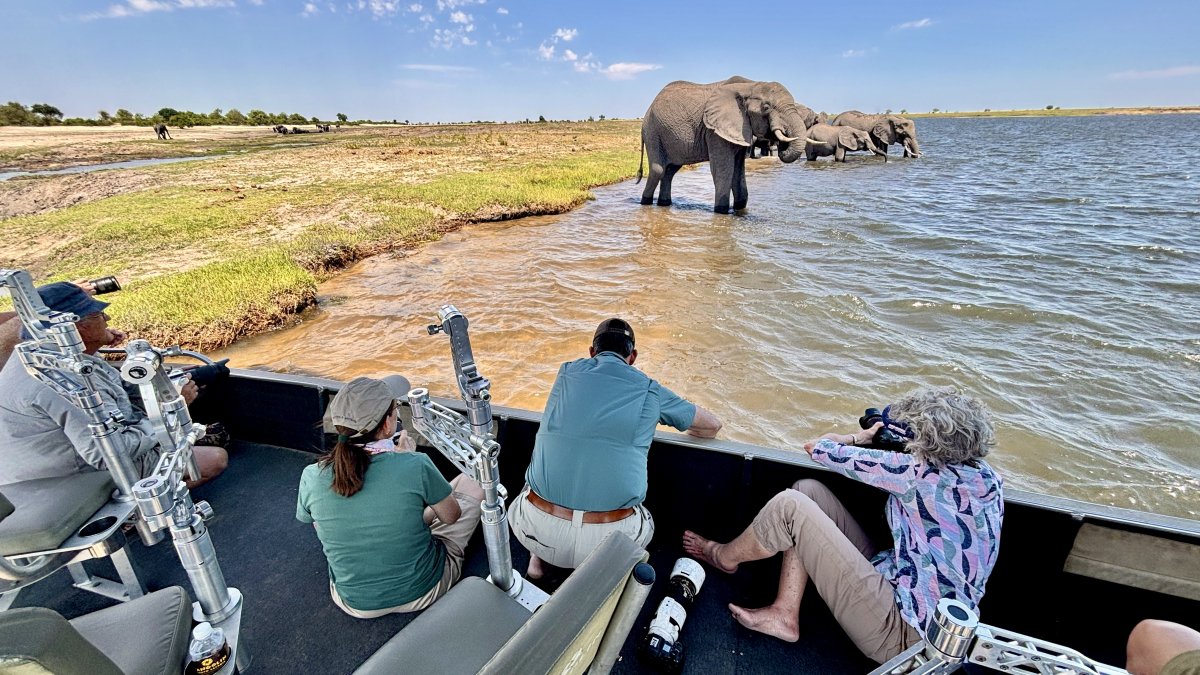

The difference between a blurry snapshot and a gallery-worthy masterpiece isn't just your camera's frame rate; it's the work you do before you even pack your bags. We all know that sinking feeling of arriving at a destination only to realize the migration moved on last week or your favorite lens is rattling dangerously in its case. Effective wildlife photography trip planning is about more than just booking a flight. It is about aligning your creative vision with the unpredictable rhythm of the natural world.
You've likely spent hours dreaming of that one perfect frame, yet the logistics of gear safety and seasonal timing can feel overwhelming. It's natural to feel anxious about the details. This guide will help you move beyond simple snapshots to create professional-grade portfolio pieces. We will walk through a clear checklist for your next adventure, covering the best seasons for specific animals and helping you decide whether a solo mission or a specialized tour fits your style. By the end, you'll have the confidence to turn your travel dreams into a successful field expedition.
Everything starts with the animal. Before you look at flights, you need to decide which "Target Species" will be the star of your portfolio. Your choice of animal dictates every other decision you make, from the lens you pack to the boots you wear. For example, if you're dreaming of a leopard draped over a leadwood branch, you'll need a different strategy than someone hunting for the perfect shot of a lion pride in the tall grass. This focus is the foundation of successful wildlife photography trip planning.
Timing is your most valuable asset. For 2026, you should look closely at the specific "Seasonal Windows" that define the natural world. Events like the Great Migration or the calving seasons in the southern Serengeti don't happen on a fixed human calendar; they follow the rains. By researching these patterns now, you can position yourself exactly where the action is likely to happen. It's also vital to look beyond the map and study animal behavior. Knowing that a cheetah often scans for prey from a termite mound allows you to set up your shot before the cat even moves. This foresight turns a lucky break into a planned success.
Ethics should always be at the heart of your plan. Choose destinations and operators that prioritize wildlife welfare and conservation. A great photo is never worth stressing an animal or damaging its habitat. Many of our tour dates for 2026 are already designed around these ethical standards, ensuring you get the best access while respecting the environment.
Don't assume that peak tourist season is the best time for your camera. Often, the "shoulder seasons" offer better light and fewer crowds. Consider how weather patterns affect your background. The dry season brings dust that creates a beautiful, hazy glow at sunset, while the wet season offers lush greens and dramatic storm clouds. A photographic window is the intersection of animal activity and light quality.
Finding the right spot is a huge part of wildlife photography trip planning. If leopards are your priority, the private reserves of Sabi Sands offer world-class sightings, while Lush Sri Lankan Holidays offers bespoke luxury experiences for photographing the leopards of Sri Lanka. If you want the scale of the Great Migration, the Maasai Mara is hard to beat. Each location has its own rhythm. Compare these iconic hubs to see which one matches the specific "look" you want for your final images.
Success in the field depends on a simple golden rule: only bring what you can comfortably carry and protect. While it's tempting to pack every piece of glass you own, overpacking often leads to missed shots because you're too busy digging through a heavy bag. Effective wildlife photography trip planning requires a kit that balances reach with portability. You want to be mobile enough to react when a leopard suddenly descends from a tree.
You also need to plan for the environment. Dust is the constant enemy in the savannah, while humidity is the primary challenge in the rainforest. Invest in high-quality rain covers and dry bags to shield your electronics. A simple paintbrush or a manual blower is essential for daily cleaning. Don't forget a second camera body. It's not just a backup if your primary fails; it allows you to keep a wide-angle lens on one and a long telephoto on the other. This means you won't have to swap lenses in a dusty wind, protecting your sensor from grit.
Travel logistics can be tricky, especially with the strict weight limits on small bush planes. These aircraft often have a 15kg to 20kg limit for all luggage, which includes your camera gear. Using a soft-sided bag can help you fit into tight cargo pods without risking your lenses. If you're feeling unsure about your setup, our Tailor Made Tours provide expert guidance on exactly what to bring for your specific destination.
Your kit should center on a fast telephoto lens, a sturdy tripod or a versatile beanbag for vehicle use, and a thorough cleaning kit. For a deeper look at the basics, see our wildlife photography tips for beginners. Always include a robust system for backing up your shots daily, such as a portable hard drive, to ensure your work is safe before you head home.
Organize your bag for quick access. Sudden sightings don't wait for you to unzip three different compartments. Keep your primary camera within arm's reach at all times. Finally, ensure you have a reliable charging solution. Many remote camps rely on solar power or generators that only run at certain times, so bring extra batteries and a universal adapter to keep your gear powered through the night.
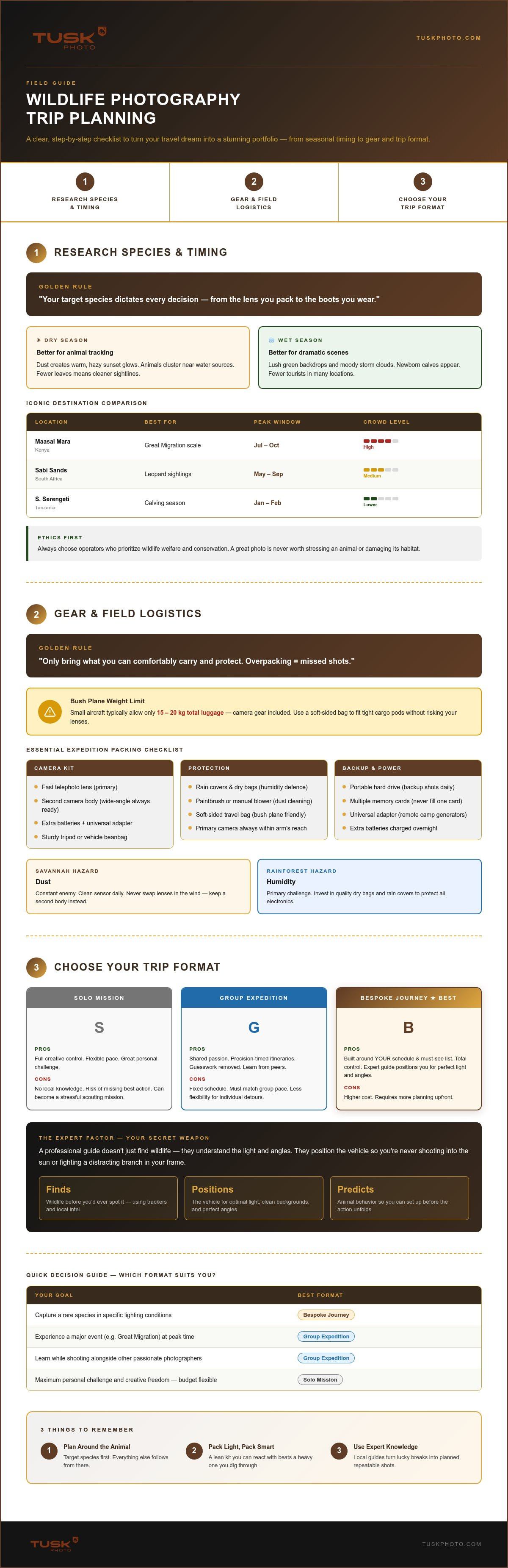
Deciding how you want to travel is the final, vital piece of your wildlife photography trip planning. Some photographers love the challenge of going solo and handling every detail themselves. While this can be rewarding, it often comes with the risk of missing the best action. Without local knowledge or a dedicated tracker, you might spend your entire trip searching for animals instead of actually photographing them. It's a common frustration that can turn a dream holiday into a stressful scouting mission.
Joining precision-timed expeditions takes that guesswork out of the equation. These scheduled tours bring you together with other enthusiasts who share your passion and skill level. If you have very specific portfolio goals, such as capturing a rare species in a particular light, a bespoke photography journey is usually the best choice. These trips are built entirely around your schedule and your "must-see" list, giving you total control over the pace of each day.
The real secret weapon on any guided trip is the "Expert Factor." A professional guide doesn't just find the wildlife; they understand the light and the angles. They know exactly where to position the vehicle so you aren't shooting directly into the sun or stuck with a distracting branch in your frame. This level of field expertise is what helps you move beyond basic shots to create professional-grade images. Having a mentor by your side ensures you're always ready when the moment happens.
Group tours are fantastic for the social experience and for learning from your peers. However, if you need 100% flexibility to stay at a sighting for hours, private photography safaris offer a more tailored approach. You might also consider On-Demand tours. These are perfect for following rare wildlife opportunities that appear suddenly, allowing you to react to nature's unpredictable timing without being tied to a fixed itinerary.
Don't wait until the last minute to lock in your wildlife photography trip planning. The most iconic lodges and expert guides often fill up more than a year in advance. It's best to start your journey at least 12 months ahead to ensure you get the best dates for the species you want to see. When you're ready to take the next step, explore our upcoming tour departures to find the adventure that fits your creative vision.
You now have the tools to turn a standard vacation into a high-level creative expedition. By focusing on species research, organizing your gear for the field, and choosing the right trip format, you're setting yourself up for success. Good wildlife photography trip planning is what separates a lucky amateur from a photographer who consistently brings home incredible images. It's about being in the right place at the right time with the right mindset.
We're here to help you bridge that gap. Every one of our journeys is led by professional photography hosts who understand the specific needs of your craft. You'll gain access to world-class wildlife destinations and enjoy tailor-made options for every skill level. We take care of the complex logistics so you can stay focused on the animal in your viewfinder. It's the simplest way to ensure your next trip results in the gallery-worthy shots you've always wanted.
Don't let another season pass by while you're still on the sidelines. The wild is calling, and there's a perfect shot out there waiting for you to find it. Start planning your dream photography journey with Tusk Photo and get ready for the adventure of a lifetime. We can't wait to see what you capture.
You should start your wildlife photography trip planning at least 12 to 18 months before your intended departure date. This lead time is necessary because the most popular lodges and expert guides often book up over a year in advance. Planning early ensures you secure a spot during critical natural events, like the Great Migration, where timing is everything for your portfolio.
A guided tour is usually the better choice if your goal is to bring home high-quality images. Professional guides have deep local knowledge that helps them find rare animals and position the vehicle for the best light. While solo trips offer independence, you'll spend much of your time on logistics and tracking. A guided expedition lets you focus entirely on your photography.
A long telephoto lens is your most important tool, but a backup camera body is also vital. Having two cameras allows you to keep different lenses ready, so you won't miss a shot while trying to swap gear in the field. You'll also need a sturdy beanbag or tripod for stability. Don't forget to pack extra memory cards and a portable drive to back up your work nightly.
Using a dedicated rain cover and a dust-proof camera bag is the best way to keep your equipment safe. Dust is a constant challenge in wildlife photography trip planning, so bring a soft paintbrush and a manual blower to clean your gear at the end of every day. If you're in a humid area, silica gel packets in your bag can help keep moisture away from your electronics.


